Understanding How Google Ranks Search Results

Every day, billions of searches are performed on Google, and within fractions of a second, the search engine delivers the most relevant results to users around the world. But have you ever wondered what happens behind the scenes? How does Google decide which pages appear at the top of search results and which ones get buried on page ten?
Understanding Google’s ranking system is crucial for anyone with an online presence, whether you’re a business owner, content creator, marketer, or SEO professional. This comprehensive guide breaks down the complex algorithms and factors that determine where your website appears in search results, including the latest developments in AI-powered search features.
The Three-Stage Process: Crawling, Indexing, and Ranking
Before Google can rank search results, it must first discover and organize the vast amount of content on the internet. This happens through a three-stage process:
1. Crawling
Google uses automated programs called "crawlers" or "spiders" (specifically, Googlebot) to continuously browse the web and discover new and updated pages. These crawlers follow links from one page to another, much like you would when clicking through a website. The process begins with a list of web addresses from previous crawls and sitemaps provided by website owners, then expands as the crawler finds new links on those pages.
2. Indexing
Once a page is crawled, Google analyzes its content; text, images, videos, and other media files, to understand what the page is about. This information is stored in Google’s massive index, a database containing hundreds of billions of web pages. During indexing, Google processes elements like title tags, meta descriptions, heading structures, and the semantic meaning of the content. Pages that violate Google’s quality guidelines or contain duplicate content may not be indexed.
3. Ranking
When you perform a search, Google doesn’t search the entire web in real-time that would be impossibly slow. Instead, it searches its index and uses sophisticated algorithms to rank the results based on relevance and quality. This is where the true complexity lies, as Google evaluates hundreds of factors to determine which pages best answer your query.
Core Ranking Factors: What Google Evaluates
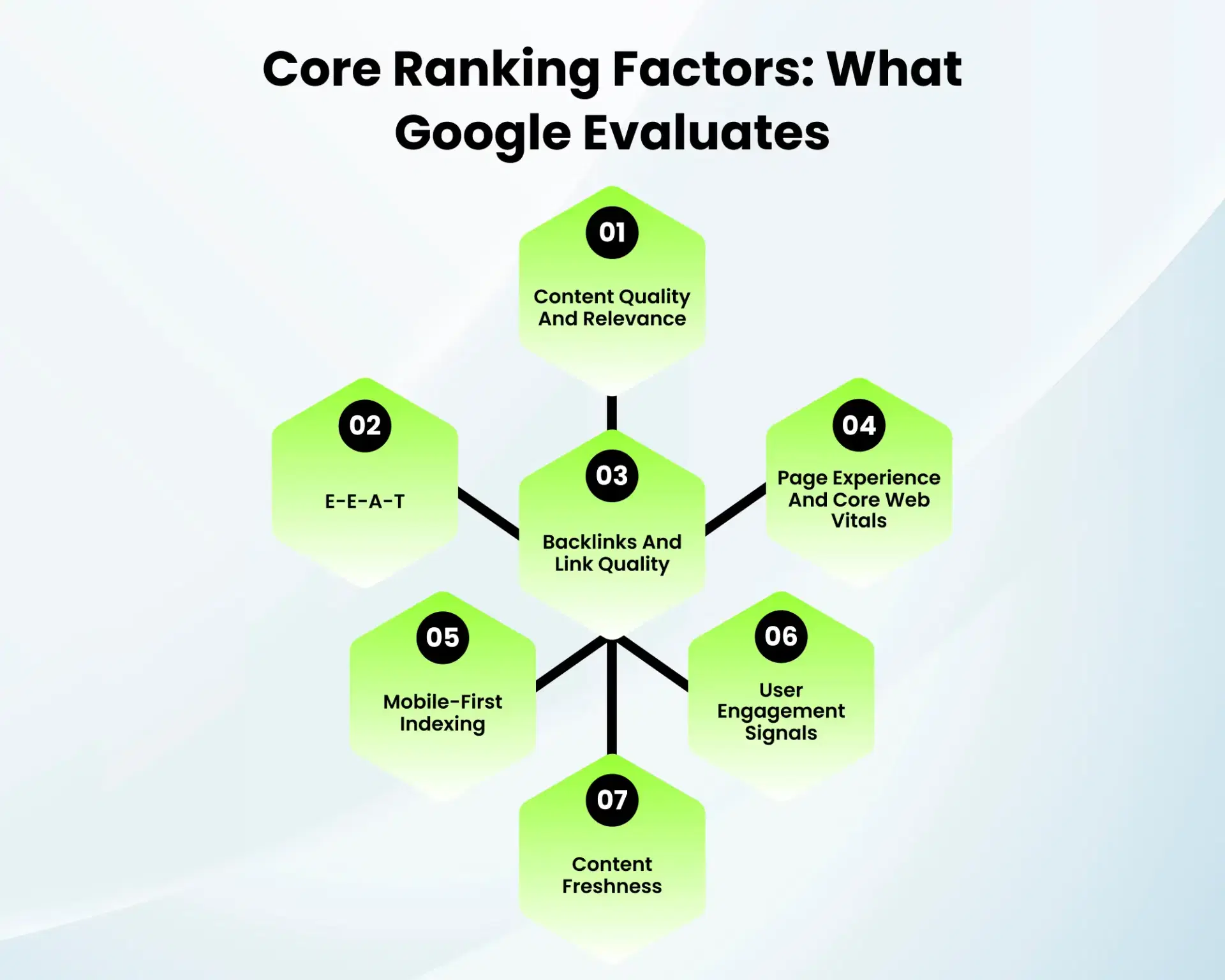
Google’s ranking algorithm considers hundreds of factors, many of which are closely guarded secrets. However, Google has publicly acknowledged several key elements that significantly influence rankings:
Content Quality and Relevance
The foundation of Google’s ranking system is matching user intent with high-quality, relevant content. Google analyzes whether your content actually answers the search query by examining keyword usage, topic depth, freshness, and comprehensiveness. However, simply stuffing keywords into your content won’t work—Google’s natural language processing algorithms, particularly BERT and MUM, understand context and semantic meaning, allowing them to identify when content genuinely provides value versus when it’s manipulated for search engines.
E-E-A-T: Experience, Expertise, Authoritativeness, and Trustworthiness
Google heavily emphasizes E-E-A-T, particularly for content in critical areas like health, finance, and safety (known as "Your Money or Your Life" or YMYL topics). Experience refers to first-hand or life experience with the topic. Expertise means having the necessary skills or knowledge. Authoritativeness is being recognized as a go-to source in your field. Trustworthiness involves being accurate, honest, and secure. Websites that demonstrate strong E-E-A-T signals through author credentials, citations, security protocols, and positive reputation rank higher.
Backlinks and Link Quality
PageRank, Google’s original algorithm, is still a crucial component of the ranking system. Backlinks serve as votes of confidence from other websites. However, not all links are equal. A link from a highly authoritative website in your industry carries far more weight than dozens of links from low-quality or spammy sites. Google evaluates the relevance of linking sites, the anchor text used, the diversity of your link profile, and whether links appear natural or manipulated. Link schemes and purchased links can result in penalties.
Page Experience and Core Web Vitals
User experience has become a significant ranking factor. Google’s Core Web Vitals measure specific aspects of page performance: Largest Contentful Paint (LCP) measures loading speed and should occur within 2.5 seconds; First Input Delay (FID), now replaced by Interaction to Next Paint (INP), measures interactivity and responsiveness; and Cumulative Layout Shift (CLS) measures visual stability. Additionally, mobile-friendliness, safe browsing (no malware or deceptive content), HTTPS security, and avoiding intrusive interstitials all contribute to page experience scores.
Mobile-First Indexing
Since 2019, Google predominantly uses the mobile version of websites for indexing and ranking. This means that if your site isn’t optimized for mobile devices—with responsive design, readable text without zooming, and touch-friendly navigation—your rankings will suffer. Given that the majority of searches now occur on mobile devices, this factor is non-negotiable.
User Engagement Signals
While Google hasn’t explicitly confirmed all engagement metrics as ranking factors, evidence suggests that user behavior influences rankings. High click-through rates from search results, low bounce rates (users staying on your page), longer dwell time (time spent on site), and pages per session all signal that users find your content valuable. Conversely, if users quickly return to search results after clicking your link ("pogo-sticking"), it may indicate poor content quality.
Content Freshness
For certain queries, particularly those related to recent events, trending topics, or regularly updated information, Google favors fresh content. The Freshness algorithm update ensures that users get the most current information. This doesn’t mean all content needs constant updating, but keeping evergreen content accurate and current can provide a ranking boost.
Understanding Search Intent
One of Google’s most sophisticated capabilities is understanding what users are really looking for when they enter a search query. Google categorizes search intent into four main types:
- Informational Intent: Users want to learn something or find answers to questions. Examples include "how does photosynthesis work" or "what is machine learning." Google ranks comprehensive guides, tutorials, and explanatory content for these queries
- Navigational Intent: Users are looking for a specific website or page. Searches like "Facebook login" or "New York Times" clearly indicate the user wants to reach a particular destination. Google prioritizes the official pages for these queries.
- Transactional Intent: Users are ready to take action, whether purchasing a product, signing up for a service, or downloading an app. Queries like "buy iPhone 15" or "subscribe to Netflix" trigger commercial results, including product pages and e-commerce sites.
- Commercial Investigation: Users are researching before making a purchase decision. Searches like "best laptops 2024" or "iPhone vs Samsung" lead Google to rank comparison articles, reviews, and buying guides.
The Rise of AI Overviews: Google’s Generative Search Experience
One of the most significant recent changes to Google’s search experience is the introduction of AI Overviews (formerly known as Search Generative Experience or SGE). This feature represents a fundamental shift in how Google presents information to users.
What Are AI Overviews?
AI Overviews are AI-generated summaries that appear at the top of search results for certain queries. Powered by Google’s advanced language models, these overviews synthesize information from multiple sources across the web to provide comprehensive, conversational answers to complex questions. Instead of requiring users to click through multiple links and piece together information themselves, AI Overviews attempt to deliver a complete answer directly in the search results.
These AI-generated responses typically appear for informational queries where users are seeking to understand a topic, compare options, or learn how to do something. The AI Overview can include text explanations, relevant follow-up questions, and links to source websites. The feature is particularly useful for queries that would traditionally require reading multiple articles to get a full understanding.
How AI Overviews Impact Traditional Rankings
The introduction of AI Overviews has significant implications for website visibility and organic traffic. When an AI Overview appears, it occupies prime real estate at the top of the search results, pushing traditional organic listings further down the page. This means users may get their answers without ever clicking through to a website, potentially reducing click-through rates for even top-ranking pages.
However, websites that are cited within AI Overviews can still benefit. Google includes clickable source links within these AI-generated summaries, and being referenced in an AI Overview can lend credibility and drive targeted traffic from users who want to explore the topic more deeply. The key is creating content that is authoritative, comprehensive, and well-structured enough for Google’s AI to reference as a reliable source.
Optimizing for AI Overviews
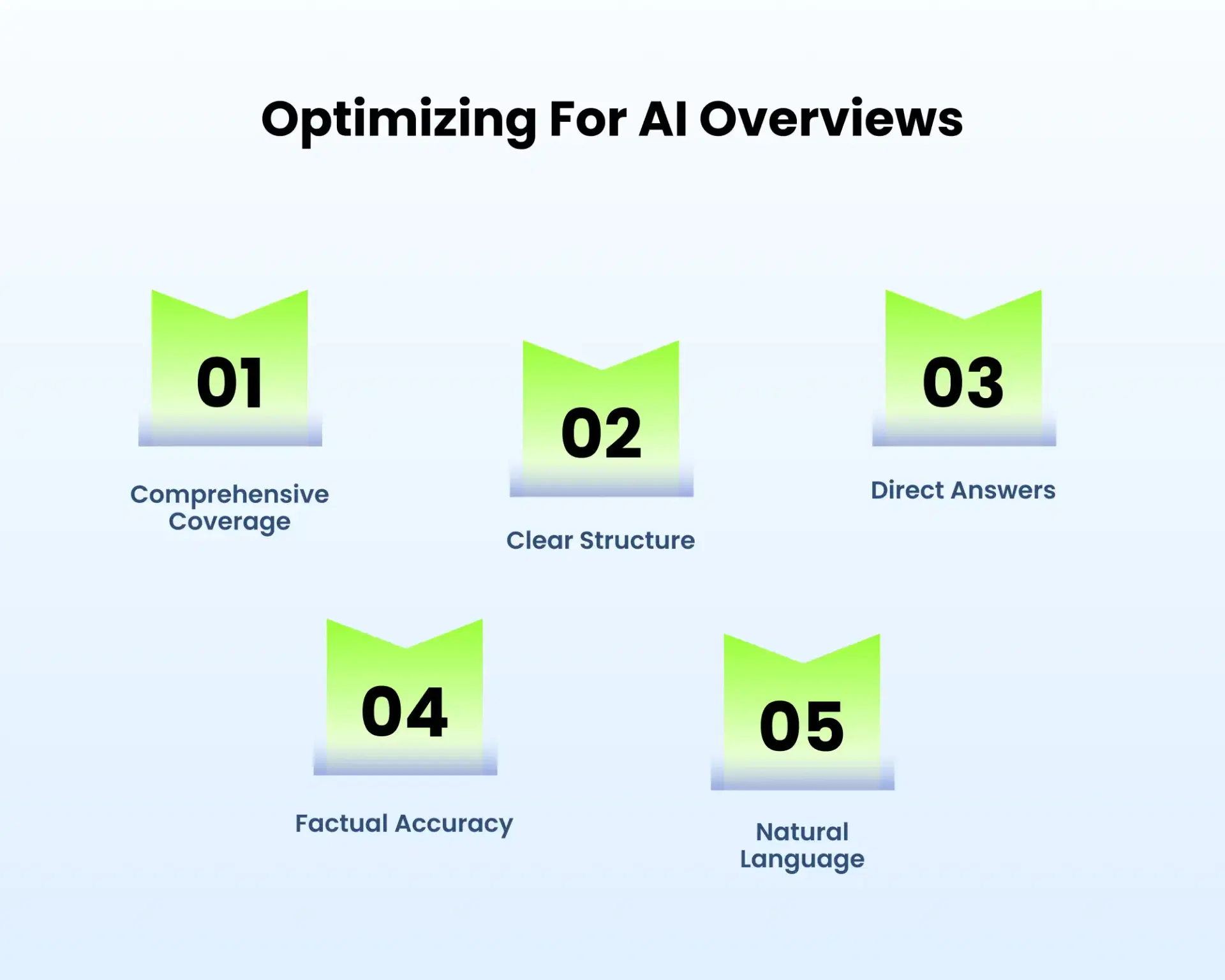
While traditional SEO principles still apply, optimizing for AI Overviews requires some additional considerations:
- Comprehensive Coverage: Create in-depth content that thoroughly addresses a topic from multiple angles. AI models favor sources that provide complete, well-rounded information.
- Clear Structure: Use clear headings, subheadings, and logical organization. Well-structured content is easier for AI to parse and extract relevant information from.
- Direct Answers: Include concise, direct answers to common questions early in your content, followed by more detailed explanations. This format works well for both traditional featured snippets and AI Overviews.
- Factual Accuracy: Ensure all information is accurate and up-to-date. AI systems prioritize reliable sources, and inaccuracies can prevent your content from being cited.
- Natural Language: Write in a conversational, natural tone that mirrors how people ask questions. AI models are trained on human language patterns and respond well to content that reads naturally.
Gemini Integration and the Importance of Citations
Google’s AI Overviews are powered by Gemini, Google’s most advanced family of large language models. Understanding how Gemini processes and cites information is crucial for content creators and SEO professionals navigating this new landscape.
How Gemini Selects Sources for Citations
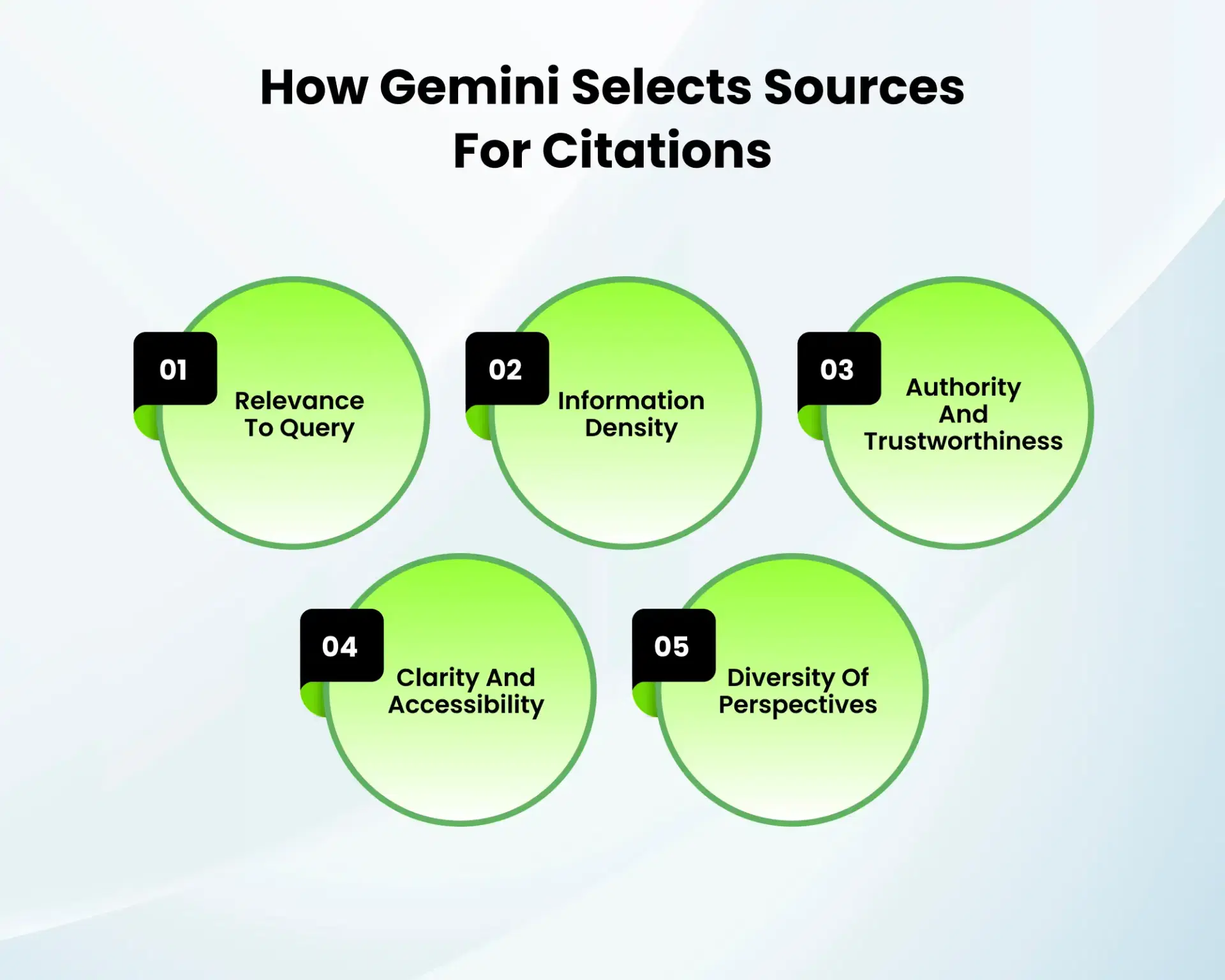
When generating AI Overviews, Gemini doesn’t simply pull from the top-ranking pages in traditional search results. Instead, it evaluates content based on several sophisticated criteria:
- Relevance to Query: The AI assesses how directly a source addresses the specific question or topic. Content that stays focused and on-topic is more likely to be cited.
- Information Density: Sources that provide substantial, detailed information are favored over thin or superficial content. The AI looks for depth and substance.
- Authority and Trustworthiness: Gemini evaluates the credibility of sources using signals similar to traditional E-E-A-T criteria. Established authorities in their fields are more likely to be cited.
- Clarity and Accessibility: Content that explains complex topics clearly and avoids unnecessary jargon is preferred, as it better serves users seeking to understand a subject.
- Diversity of Perspectives: For complex or nuanced topics, Gemini may cite multiple sources representing different viewpoints or approaches, providing users with a balanced overview.
The Value of Being Cited in AI Overviews
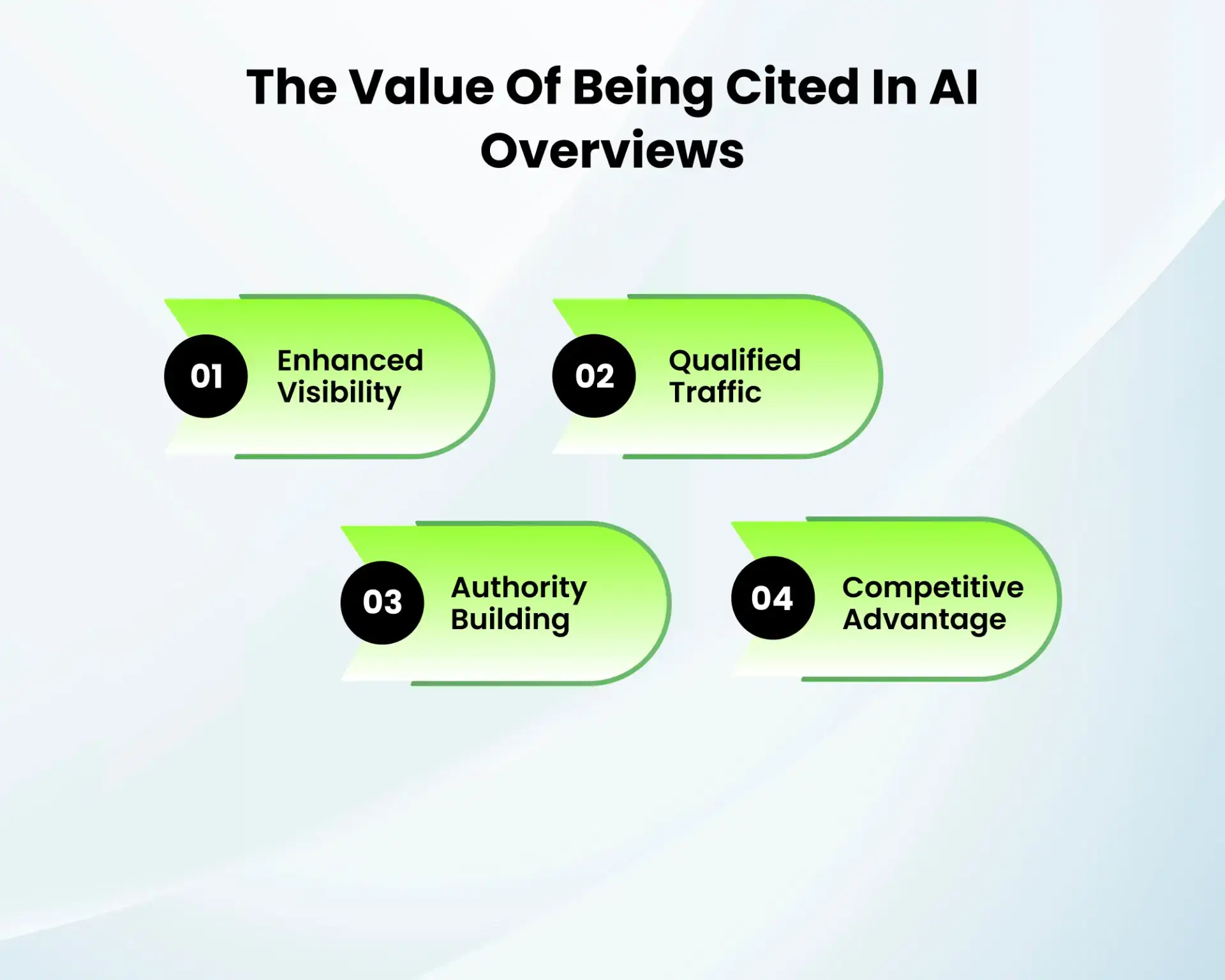
Being cited as a source in a Gemini-powered AI Overview carries several benefits:
- Enhanced Visibility: Citations appear prominently within the AI Overview, often with clickable links that include the page title and domain, making them highly visible to users.
- Qualified Traffic: Users who click through from AI Overview citations are typically seeking more detailed information, making them more engaged and valuable visitors.
- Authority Building: Being recognized by Google’s AI as a credible source reinforces your site’s authority and expertise in your subject area.
- Competitive Advantage: As AI Overviews become more prevalent, being cited gives you an edge over competitors whose content isn’t selected by the AI.
Strategies to Increase Citation Potential
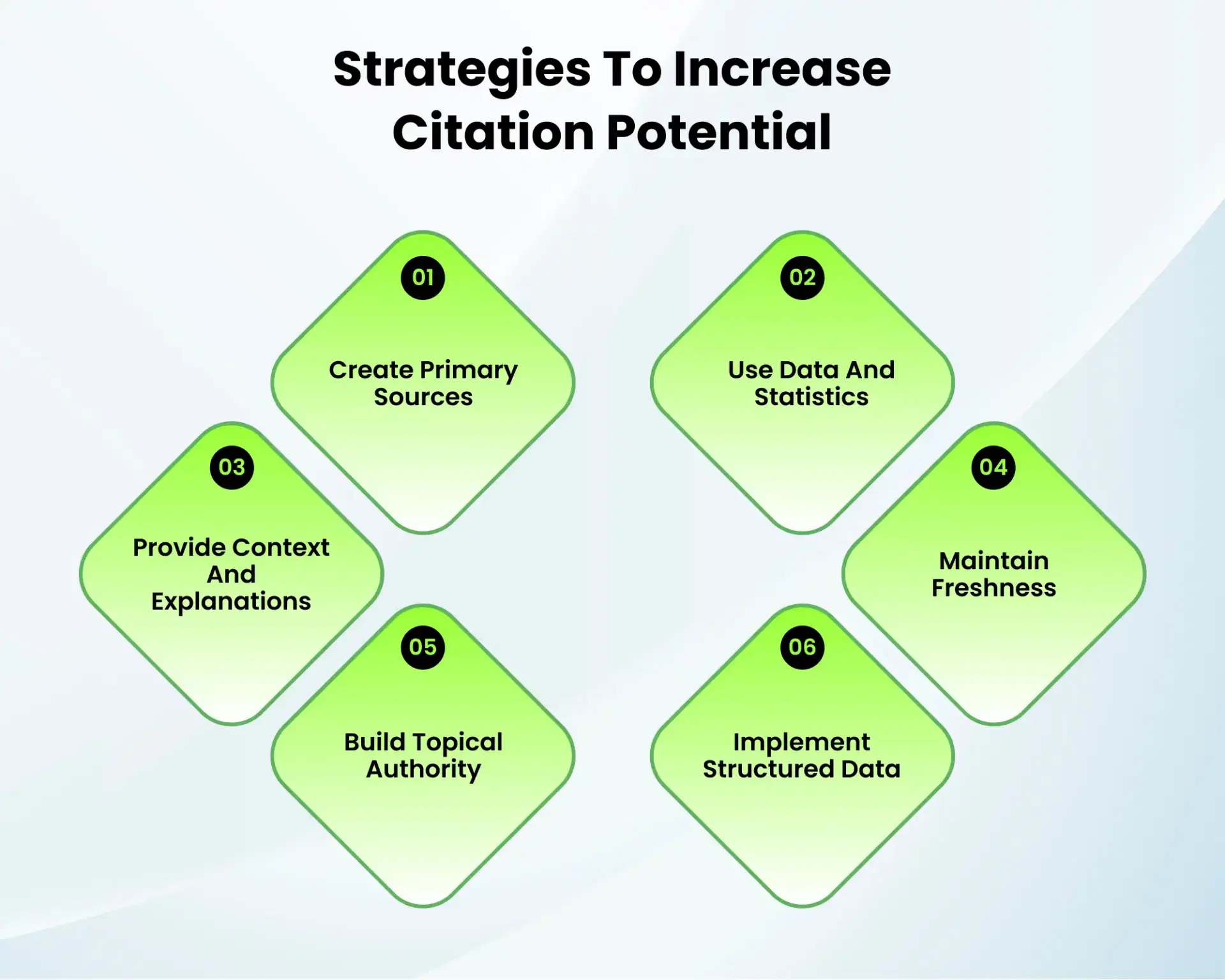
To maximize your chances of being cited in Gemini-powered AI Overviews, consider these strategies:
- Create Primary Sources: Original research, case studies, surveys, and expert analysis are highly valuable to AI systems looking for authoritative information. Publishing unique data or insights makes your content indispensable.
- Use Data and Statistics: Include specific data points, statistics, and concrete examples. AI models value quantifiable information that can be cited with precision.
- Provide Context and Explanations: Don’t just state facts—explain the "why" and "how." Contextual information helps AI systems understand the significance of information and when to cite it.
- Maintain Freshness: Regularly update your content to reflect the latest information, trends, and developments. AI systems favor current, relevant sources over outdated ones.
- Build Topical Authority: Create comprehensive content clusters around your core topics. When Google recognizes your site as a go-to resource for specific subjects, it’s more likely to cite your content across related queries.
- Implement Structured Data: Use schema markup to help AI systems better understand and categorize your content. Structured data makes it easier for Gemini to extract and cite specific information.
The Future of AI-Powered Search
As AI Overviews continue to evolve and expand to more query types, the way users interact with search results is fundamentally changing. Google has indicated that AI Overviews will become more conversational, with users able to ask follow-up questions and engage in multi-turn dialogues within the search interface.
This shift means that traditional metrics like click-through rates and page rankings may become less important for some query types, while being cited as a trusted source within AI-generated content becomes increasingly valuable. The websites that thrive in this new environment will be those that focus on creating genuinely helpful, authoritative content that serves both human readers and AI systems seeking reliable information to cite.
RankBrain and Machine Learning
In 2015, Google introduced RankBrain, a machine learning component of its algorithm that helps process and understand search queries. RankBrain is particularly useful for interpreting ambiguous or never-before-seen queries (which make up about 15% of all searches). It analyzes patterns in how users interact with search results and learns which results satisfy particular types of queries.
RankBrain converts words and phrases into mathematical entities called vectors, allowing it to understand relationships between concepts. If it encounters an unfamiliar query, it can make educated guesses about what the user wants based on similar queries it has processed. This continuous learning process means Google’s ranking algorithm becomes more sophisticated over time.
The Role of Personalization and Localization
Not everyone sees the same search results, even for identical queries. Google personalizes results based on several factors:
- Location: Local searches (like "restaurants near me") obviously depend on your physical location, but even general searches may be influenced by where you are. Google assumes that users prefer content from their region or in their language.
- Search History: If you’re logged into your Google account, your previous searches and browsing behavior can influence results. If you frequently visit certain types of sites, Google may prioritize similar content.
- Device Type: Mobile searches may prioritize different results than desktop searches, particularly for local queries or app-related searches.
- Language and Region Settings: Your language preferences and Google domain (.com, .co.uk, .ca, etc.) affect which results appear.
SERP Features
Beyond the traditional blue links, Google’s search results pages (SERPs) now include various special features that can provide instant answers or enhanced visibility:
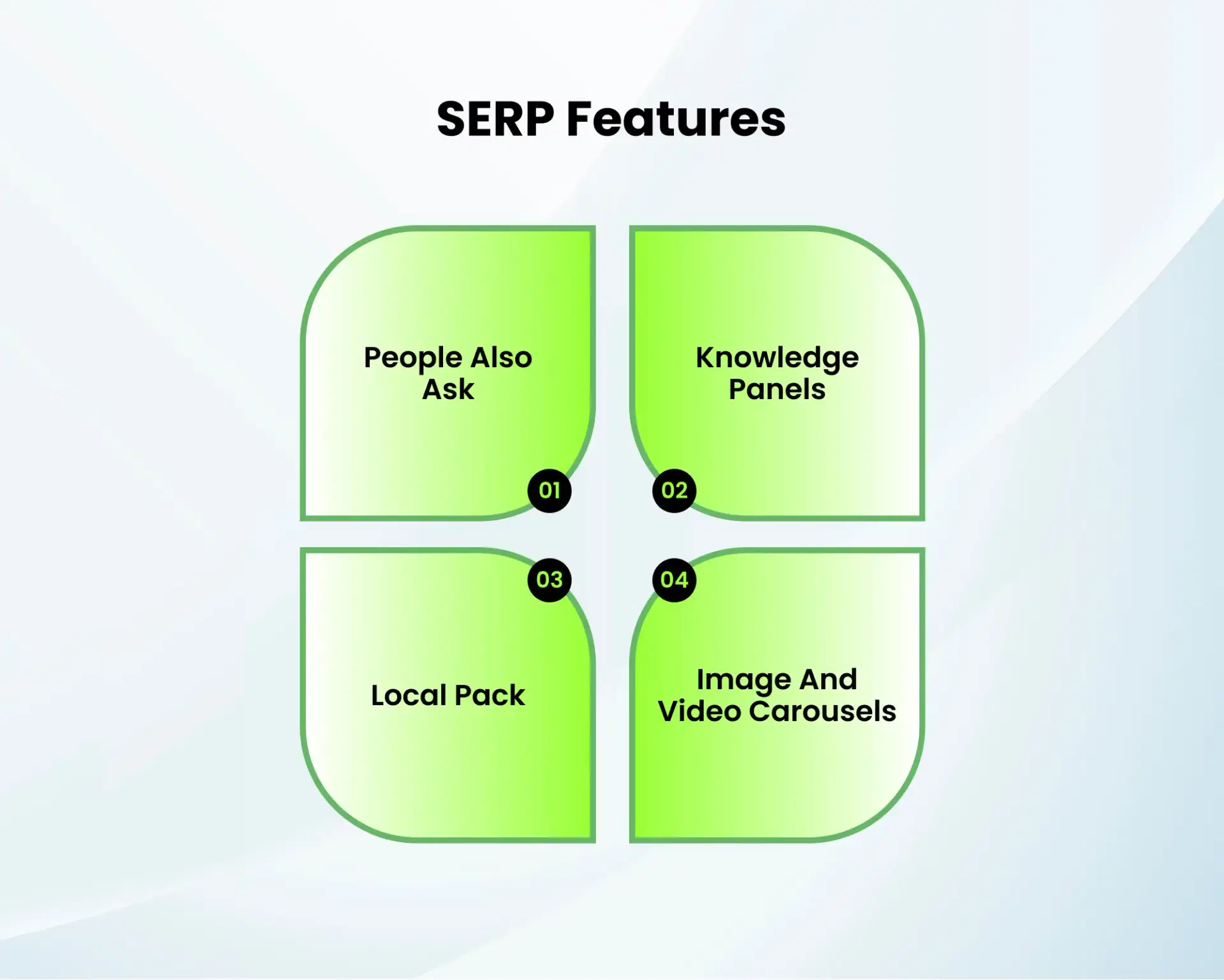
- People Also Ask (PAA): These expandable boxes contain related questions and brief answers, providing users with additional context about a topic.
- Knowledge Panels: These appear for entities like people, places, organizations, and things, pulling information from Google’s Knowledge Graph and various sources.
- Local Pack: For local searches, Google displays a map with three business listings, showing name, address, phone number, ratings, and reviews.
- Image and Video Carousels: Visual content is highlighted for relevant queries, with scrollable galleries of images or videos.
Algorithm Updates: Why Rankings Fluctuate
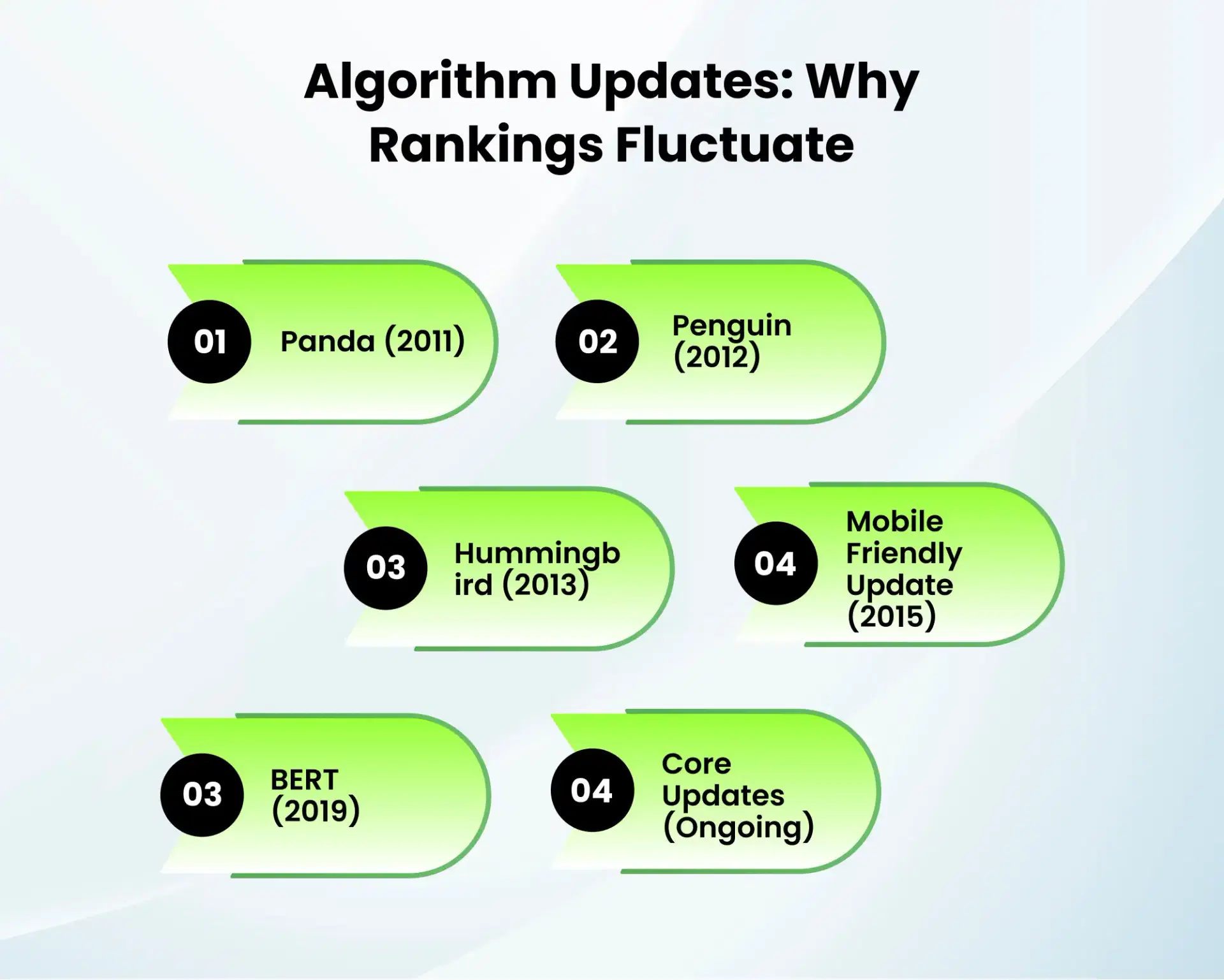
Google continuously updates its algorithms—thousands of times per year, in fact. Most updates are minor and go unnoticed, but major core updates can cause significant ranking shifts. Some notable algorithm updates include:
- Panda (2011): Targeted low-quality content, thin content, and content farms.
- Penguin (2012): Penalized websites with manipulative link schemes and keyword stuffing.
- Hummingbird (2013): Improved understanding of conversational queries and semantic search.
- Mobile-Friendly Update (2015): Boosted mobile-optimized pages in mobile search results.
- BERT (2019): Enhanced understanding of natural language and context using neural networks.
- Core Updates (Ongoing):Broad updates that reassess content quality across the web, typically occurring several times per year.
These updates mean that SEO is not a one-time effort. Websites need to adapt to changing standards and continuously improve their content and user experience.
What Google Doesn’t Want You to Do
Understanding Google’s ranking factors also means knowing what to avoid. Google actively penalizes manipulative tactics, including:
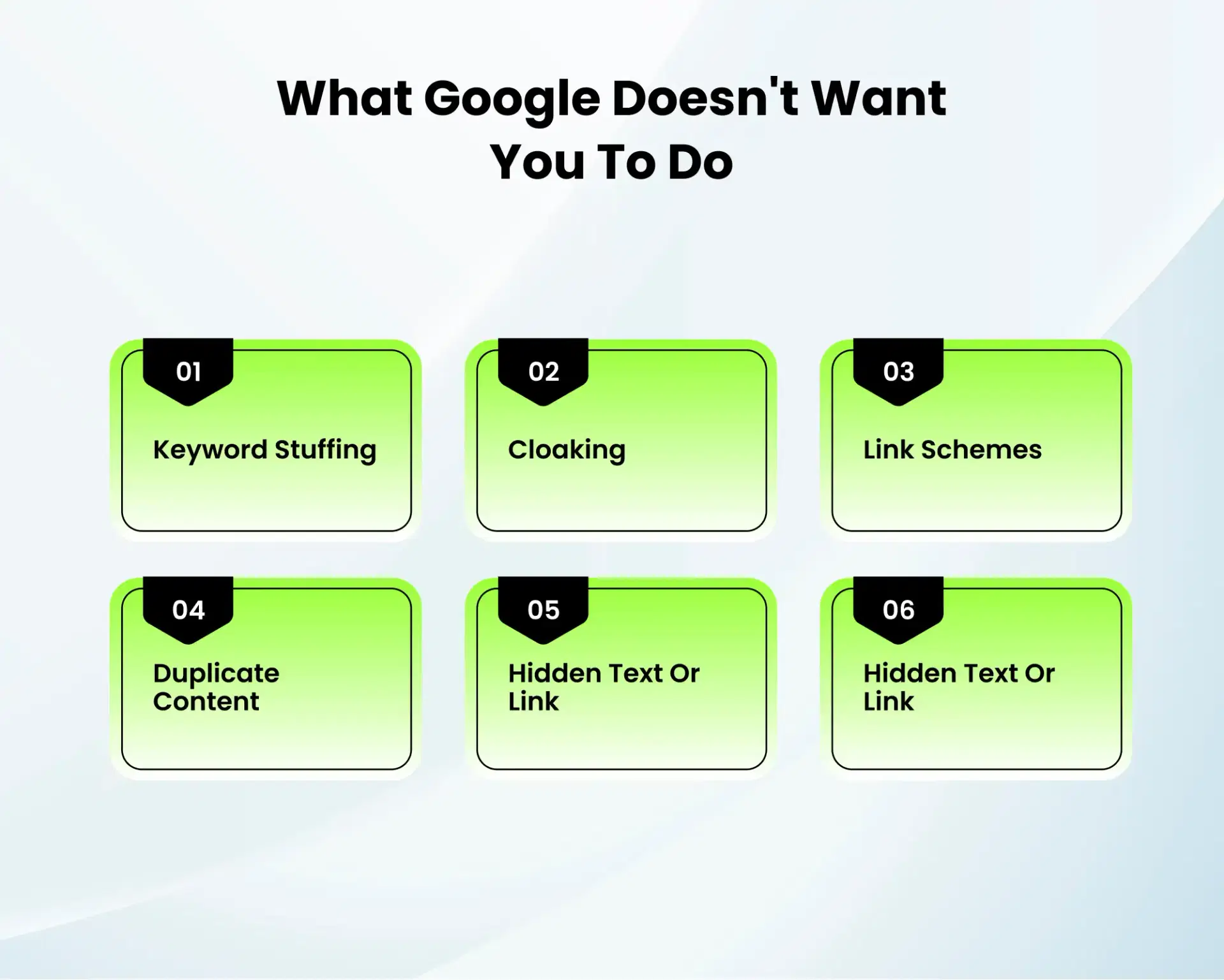
- Keyword Stuffing: Unnaturally cramming keywords into content to manipulate rankings.
- Cloaking: Showing different content to search engines than to users.
- Link Schemes: Buying links, participating in link exchanges, or using automated programs to create links.
- Duplicate Content: Copying content from other sites or creating multiple pages with nearly identical content.
- Hidden Text or Links: Using white text on white backgrounds or hiding links in punctuation marks.
- Doorway Pages: Creating low-quality pages optimized for specific keywords that funnel users to a single destination.
Violating these guidelines can result in manual penalties or algorithmic demotions that severely impact your visibility in search results.
Practical Implications: How to Improve Your Rankings
Understanding how Google ranks results leads to actionable strategies for improving your website’s visibility:
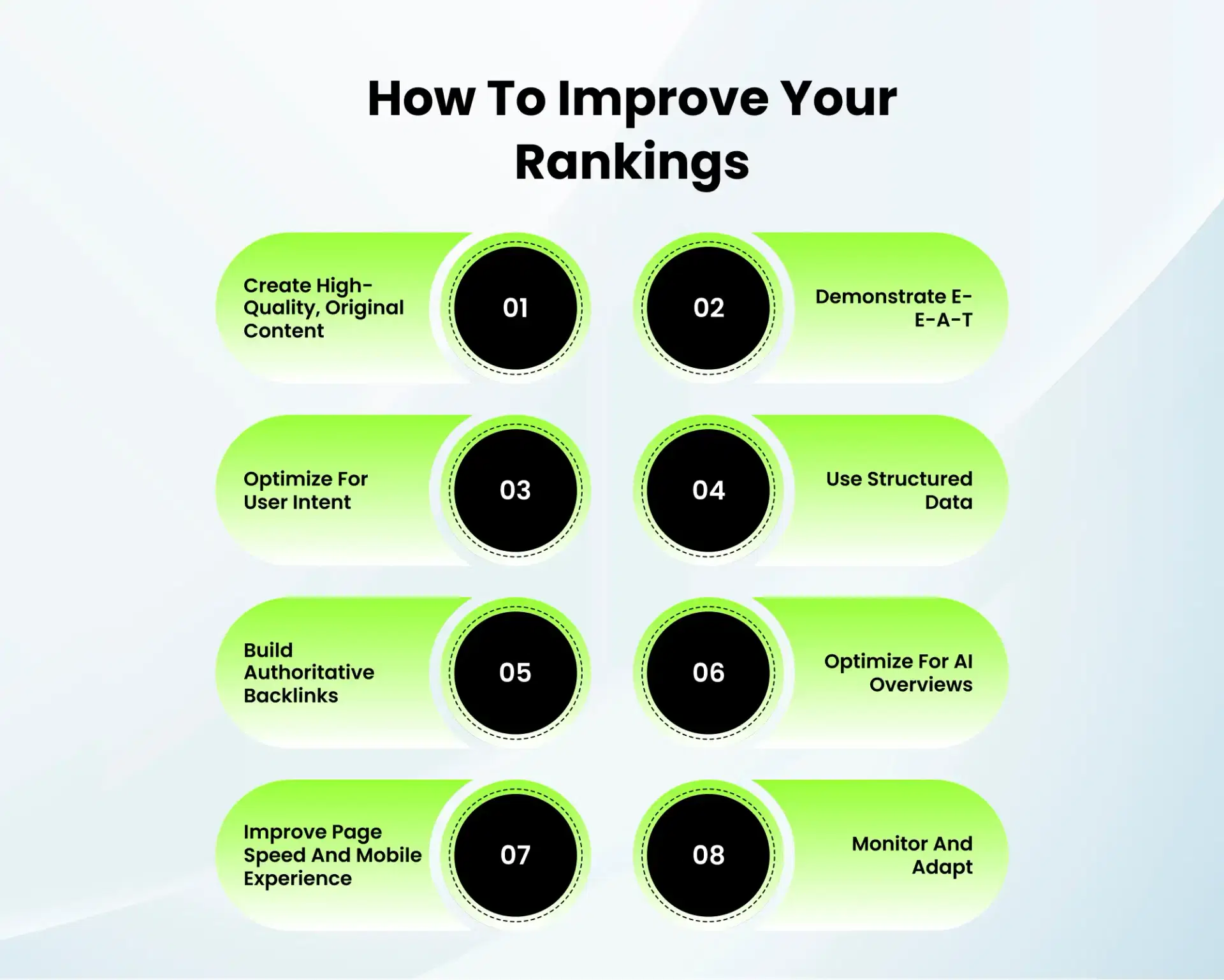
- Create High-Quality, Original Content: Focus on providing genuine value to your audience. Answer questions thoroughly, offer unique insights, and keep content updated.
- Optimize for User Intent: Understand what users are really looking for when they search and structure your content to meet those needs.
- Build Authoritative Backlinks: Earn links naturally by creating linkable assets—original research, comprehensive guides, tools, or compelling stories that others want to reference.
- Improve Page Speed and Mobile Experience: Optimize images, minimize code, use content delivery networks, and ensure your site works flawlessly on all devices.
- Demonstrate E-E-A-T: Showcase author credentials, cite reputable sources, maintain accurate information, secure your site with HTTPS, and build a positive online reputation.
- Use Structured Data: Implement schema markup to help Google understand your content and potentially earn rich results like star ratings, recipe cards, or event listings.
- Optimize for AI Overviews: Create comprehensive, well-structured content that can serve as a reliable source for Gemini-powered AI summaries. Focus on clarity, accuracy, and depth.
- Monitor and Adapt: Track your rankings, analyze user behavior through analytics, stay informed about algorithm updates, and continuously refine your approach.
Conclusion
Google’s ranking system is extraordinarily complex, incorporating hundreds of factors and constantly evolving through machine learning and algorithm updates. The introduction of AI Overviews powered by Gemini represents one of the most significant changes to search in recent years, fundamentally altering how information is presented to users and how websites compete for visibility.
While the specific details of the algorithm remain proprietary, Google has been increasingly transparent about its core principles: rewarding high-quality content that serves user needs, prioritizing websites that demonstrate expertise and trustworthiness, and ensuring a positive user experience. In the age of AI-powered search, these principles are more important than ever.
The most important takeaway is that sustainable SEO success comes from focusing on your users rather than trying to game the system. Whether your content appears in traditional search results or is cited in AI Overviews, the winning strategy remains the same: create genuinely valuable, authoritative content that helps people. Google’s algorithms—whether traditional ranking systems or advanced AI like Gemini—are all designed to identify and reward sites that genuinely serve users’ needs.
As search technology continues to advance—with developments in AI, voice search, visual search, and beyond—the fundamentals remain constant: quality, relevance, and user satisfaction. Understanding how Google ranks search results isn’t just about improving your rankings; it’s about building a better, more helpful web for everyone. The websites that will thrive in this AI-powered future are those that embrace transparency, demonstrate genuine expertise, and consistently provide value to their audiences.
Frequently Asked Questions
In 2026, Search Intent Alignment coupled with Information Gain has overtaken simple keyword density. Google’s algorithms, powered by BERT and Gemini-based models, no longer just look for the words you use; they calculate whether your content provides unique value (new data, first-hand experience, or a fresh perspective) that isn’t already present in the top 10 results.
While they overlap, they target different parts of the modern SERP:
- SEO (Search Engine Optimization): Focuses on traditional blue-link rankings through technical health, backlinks, and keyword relevance.
- GEO (Generative Engine Optimization):ocuses on making your content "citeable" for AI models. This involves using high-authority citations, statistics, and unique brand insights that AI engines use to build their responses.
- AEO (Answer Engine Optimization): Focuses on winning the "Zero-Click" search. It targets voice search and featured snippets by providing direct, concise answers to specific questions early in the content.
Yes, but the nature of the link has changed. Google now prioritizes Entity-based Authority. A single link from a niche-relevant, authoritative "Entity" (a recognized brand or expert in your field) is worth more than hundreds of generic guest posts. Google uses these links to verify your site’s "Trustworthiness" in its Knowledge Graph.
Google uses aggregated, anonymized interaction data such as Interaction Rate and Content Consumption Flow to determine if a page actually solved the user’s problem. If a user clicks your result and immediately returns to the search page (pogo-sticking), it signals to Google that your content failed to meet the intent, leading to a ranking drop.
To be "machine-readable" for AI Overviews, follow this AEO-Friendly Structure:
- Direct Answer First: Answer the primary query in the first 50–100 words.
- Semantic Headers: Use H2s and H3s that are phrased as the questions users actually ask.
- Structured Data: Implement FAQ, HowTo, and Article Schema to help AI bots parse your facts.
- Bullet Content: Use lists for processes or key takeaways; AI models prefer scannable data for their summaries.
No, Google rewards high-quality content regardless of how it is produced. However, "low-effort" AI content that lacks original insight or human-verified accuracy is flagged as "Scaled Content Abuse." The key is to use AI for efficiency but "human-ize" it with real-world case studies and expert commentary.
- The Three-Stage Process: Crawling, Indexing, and Ranking
- Core Ranking Factors: What Google Evaluates
- Understanding Search Intent
- The Rise of AI Overviews: Google’s Generative Search Experience
- Optimizing for AI Overviews
- Gemini Integration and the Importance of Citations
- The Future of AI-Powered Search
- RankBrain and Machine Learning
- The Role of Personalization and Localization
- SERP Features
- Algorithm Updates: Why Rankings Fluctuate
- What Google Doesn’t Want You to Do
- Practical Implications: How to Improve Your Rankings
- Conclusion
Table Of Content