Local SEO vs. Traditional SEO
Which One Drives More Sales?

Most businesses are losing customers because they get SEO wrong. Every day, businesses pour thousands into broad, national SEO strategies when what they really need is a localized approach. Others ignore traditional Organic search engine optimization because they think Local SEO alone will drive enough business.
Both are mistakes.
Your SEO strategy needs to align with your business model otherwise, your competitors will outrank you, outspend you, and outsell you.
When businesses think about SEO, they often picture ranking on Google’s first page for competitive keywords. But not all SEO strategies are created equal and both local SEO and traditional or organic SEO serve different purposes, cater to different audiences, and drive conversions and sales in distinct ways.
If you’re wondering which one is the better investment for your business, this guide will break down the key differences, their sales impact, and how to choose the right SEO approach for maximum results.
What’s the Difference Between Organic SEO and Local SEO?
At the core, both Local SEO and traditional SEO aim to increase a website’s visibility on search engines. However, Local SEO focuses on ranking in geographically relevant searches, whereas traditional SEO aims for broader, often national or global reach.
A business serving a specific location, like a dental clinic or a restaurant, benefits from Local SEO. Whereas, an eCommerce store, a blog, or a SaaS company thrives with traditional SEO, since their audience isn’t tied to a physical location.
Organic SEO focuses on ranking for keywords that aren’t location specific, such as "best running shoes" or "how to lose weight fast." It relies on high-quality content, backlinks, and strong on-page optimization.
Local SEO prioritizes text searches, Google Business Profile optimization, local citations, and customer reviews to help businesses appear in searches like "best pizza near me" or "dentist in LA."
SEO for Local vs. National Businesses
Traditional organic search is about playing the long game. It’s for businesses that want to rank nationally or globally and compete for high-value search terms. This type of SEO builds long-term authority and can generate consistent traffic without ad spend.
However, it takes time. The competition is fierce, and rankings are won by those who invest in high-quality content, backlinks, and technical SEO.
Who Needs Organic SEO
If your business sells to customers beyond your local area, traditional seo service is your best bet;
- SaaS companies and tech startups selling digital products
- eCommerce brands competing for high-intent keywords
- Online service providers who don’t have a physical location (like, (consultants, digital marketing agencies, etc.)
- Educational platforms and blogs that rely on content-driven traffic
How to Win at Traditional SEO
If you want to rank organically, you need to think beyond just keywords. You need a content and authority-building strategy that makes your website the go-to resource in your industry;
- Create pillar content that answers industry questions better than anyone else
- Build high-quality backlinks from trusted sources to boost authority
- Optimize technical SEO with a fast, mobile-friendly website
- Use internal linking to help Google understand content relationships
When to Invest in Traditional SEO
- If your business operates nationally or internationally
- If your revenue depends on online sales or lead generation
- If you rely on content marketing and backlinks for traffic
Why Traditional Organic SEO Works
If done correctly, organic SEO creates a sustainable growth engine. Your website will attract visitors, generate leads, and convert customers; without constantly paying for ads.F
Where Most Businesses Go Wrong
Many businesses think just publishing content is enough. The reality is without backlinks, authority, and proper keyword strategy, content alone won’t rank.
Whereas, Local SEO is about dominating your city or service area. If your business needs walk-in customers or local leads, then Local SEO is the best investment you can make since the goal here is to get your business in front of people searching for your exact services in your location. For instance, local businesses like law firms, repair services, and medical clinics, thrive on Local SEO because potential customers are searching for nearby services.
Who Needs Local SEO
If your business depends on local customers finding you, you need to prioritize Local SEO over everything else;
- Brick-and-mortar stores like restaurants, clinics, and retail shops
- Service-based businesses like plumbers, electricians, and law firms
- Multi-location businesses needing visibility in different cities
How to Win at Local SEO
Ranking locally isn’t just about having a website. Google’s local ranking factors are different from traditional SEO.
- Optimize Google Business Profile with photos, reviews, and accurate business details
- Build local citations on Yelp, directories, and business listings
- Encourage customer reviews because they directly impact rankings
- Create geo-targeted content focusing on city-specific search terms
When to Invest In Local SEO
- If your business relies on foot traffic or local customers
- If you serve a specific geographic area
- If you want to appear in Google’s Local Pack and Maps searches
Why Local SEO Works
When people search for a business near them, Google prioritizes local results. Businesses that appear in the Google Map Pack get over 70% of clicks, leading to more calls, visits, and sales.
Where Most Businesses Go Wrong
Some businesses rely only on their website to rank locally, but without local backlinks, and a review strategy, it is very hard to rank in local searches.
Key Differences Between Local SEO and Organic SEO
Target Audience and Search Intent
Local SEO targets people actively searching for services near them. These searches often have higher intent, someone searching for "emergency plumber near me" is likely to hire a plumber within hours.
Traditional SEO casts a wider net, focusing on informational and transactional searches. Someone looking up "best email marketing software" might be researching options before making a decision weeks later.
Ranking Factors
Traditional SEO relies heavily on content, backlinks, and technical SEO. Businesses need high-quality articles, authoritative links, and an optimized site structure to rank well.
Local SEO, on the other hand, focuses on relevance, proximity, local keywords, and Google My Business optimization. Citations (mentions of a business’s name, address, and phone number) and customer reviews play a critical role in boosting rankings. Read more about local seo and how it works.
Geographic Relevance and Local Pack Listings
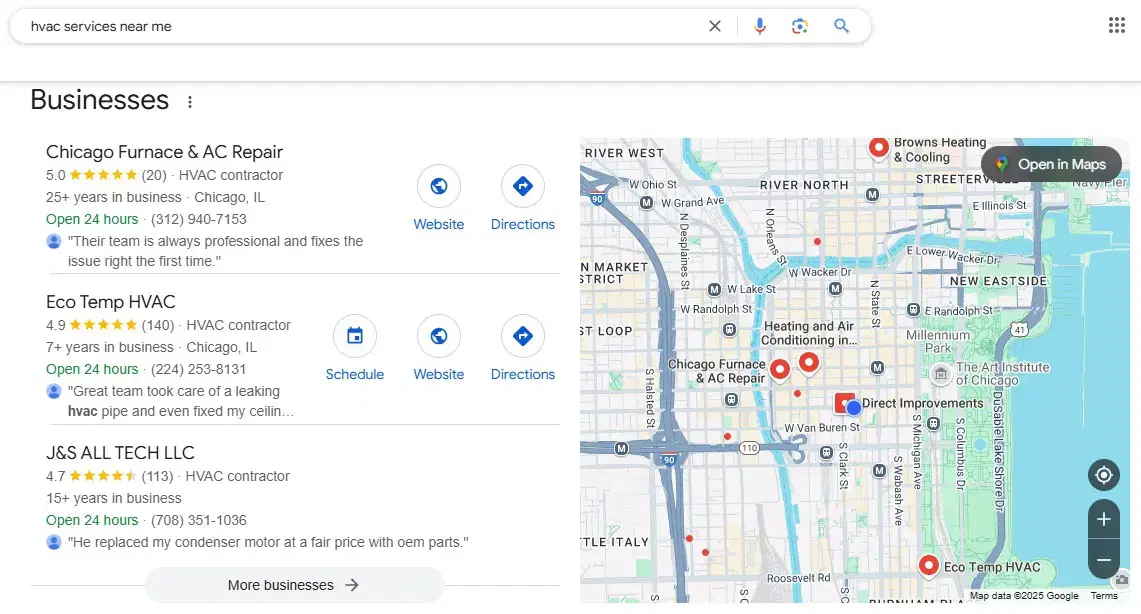
One major advantage of Local SEO is the Google Local Pack, the map-based search results that appear for local searches. If your business appears in the top three listings, you’re more likely to get clicks and calls.
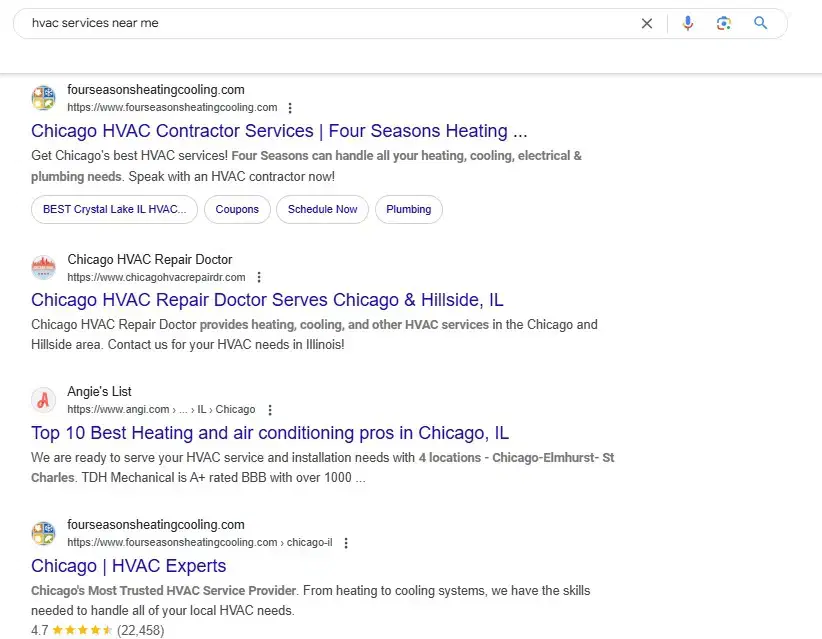
Traditional SEO, however, aims for top rankings in organic search results, which don’t have geographic constraints.
Your SEO strategy should match the type of business you run because different businesses have very different needs when it comes to ranking strategy.
| Factors | Local SEO Priority | Organic SEO Priority |
|---|---|---|
| Customer Base | Local community or city | Nationwide or global |
| Search Intent | “Near me” searches | Informational and transactional searches |
| Best Ranking Strategy | Google Business Profile and location pages | Content marketing and backlinks |
| Traffic Source | Google Maps and local directories | Search engine results pages |
Example of a Business That Needs Local SEO
Ranking for ‘best dentist in the US’ won’t help a dental clinic in Houston get more patients. Instead, with a professional local SEO service in Houston, the clinic can rank in local searches for keywords like “best dentist in Houston” and “emergency dentist near me” which will bring in local patients who are seeking care actively.
Example of a Business That Needs Organic SEO
A company selling accounting software doesn’t care about ranking in one city. They need to rank nationwide for search terms like “best accounting software for small businesses.”
What If You Need Both Local and Organic SEO
Some businesses actually need both. Take an IT support company as an example. They need Local SEO to attract nearby clients searching for “IT support in Houston.” At the same time, traditional SEO helps them rank for broader topics like “best cybersecurity practices for small businesses” or “how to set up cloud storage.” Since they can also provide online services nationwide, a strong SEO strategy ensures they capture both local customers and a wider national audience.
Do SEO and Local SEO Affect Each Other?
Yes! A strong website with traditional SEO principles (fast loading speeds, keyword-rich content, and good backlinks) supports Local SEO rankings. Similarly, strong local presence (citations, reviews, and engagement on Google business profile) can boost a website’s overall authority, improving traditional SEO.
Which SEO Strategy Converts Better?
Lead Quality and Buyer Intent
Local SEO tends to drive high-intent leads, customers looking for immediate services like "emergency locksmith" or "best hair salon near me." These leads are more likely to convert quickly.
Traditional SEO focuses more on long-term lead generation. A blog post about "best CRM software for small businesses" might attract readers who take weeks or months before making a purchase.
Conversion Rates and Customer Journey
Local SEO conversion rates are often higher because users searching for local businesses have an immediate need. A well-optimized Google My Business profile with strong reviews and clear contact information can generate more direct calls and visits.
Traditional SEO plays the long game; educating, nurturing, and guiding customers through the decision-making process with blog content, whitepapers, and comparison pages.
Local vs. Global Market Reach
If your business operates only in one city, Local SEO is your best bet. But if you want to attract a global audience, traditional SEO is the right approach.
Revenue Potential for Small vs. Large Businesses
Small businesses benefit more from Local SEO since it allows them to rank against bigger competitors within their service area. However, large businesses with nationwide operations rely more on traditional SEO to maintain online visibility at scale.
Can Local SEO Replace PPC?
Some businesses think Local SEO can fully replace Google Ads. This is a dangerous assumption. While Local SEO can reduce dependency on paid ads over time, it doesn’t always replace PPC. Google Ads still provide instant visibility, but a well-executed Local SEO strategy can significantly reduce PPC ad spend but not eliminate it completely.
When to Use Local SEO vs PPC
If you need immediate leads, PPC is the fastest way to drive traffic. If you want long-term, sustainable growth, invest in Local SEO.
| Factor | Local SEO | PPC (Google Ads) |
|---|---|---|
| Cost | Low long-term cost | High ongoing cost |
| Speed | Takes 3-6 months | Instant visibility |
| Best For | Long-term organic growth | Quick wins and lead generation |
Choosing the Right SEO Strategy for Your Business
If you choose the wrong SEO strategy, you’ll waste time and money. If you align your approach with your business model, you get higher rankings, more leads, and better sales.
- If you rely on local customers, local SEO is your top priority
- If you need to scale nationally, organic SEO is your best investment
- If you need quick traffic, PPC should be part of your strategy
- If you want long-term growth, a hybrid SEO approach is the best solution
Can You Combine Both for Maximum Results?
Yes! Many businesses benefit from both traditional and local seo strategies. For example, a law firm can optimize for Local SEO to attract clients in their city while also using traditional SEO to rank for informative legal content on a national level.
Which One Drives More Sales?
The answer depends on your business model. Local SEO is the clear winner for businesses relying on foot traffic or local clients, as it captures high-intent searches with fast conversion potential. Traditional SEO is more effective for brands looking to dominate a broader audience and generate long-term organic growth nationwide.
For many businesses, a combination of both strategies provides the best results, ensuring visibility in local searches while also ranking for broader industry terms. The key is to align your SEO approach with your sales goals, audience, and market reach.
If you’re not sure what’s the best route for your business, check your website’s seo score and schedule a FREE consultation!
Claim Your Free Consultation
- What’s the Difference Between Organic SEO and Local SEO?
- SEO for Local vs. National Businesses
- Key Differences Between Local SEO and Organic SEO
- What If You Need Both Local and Organic SEO
- Do SEO and Local SEO Affect Each Other?
- Which SEO Strategy Converts Better?
- Can Local SEO Replace PPC?
- Choosing the Right SEO Strategy for Your Business
Table Of Content